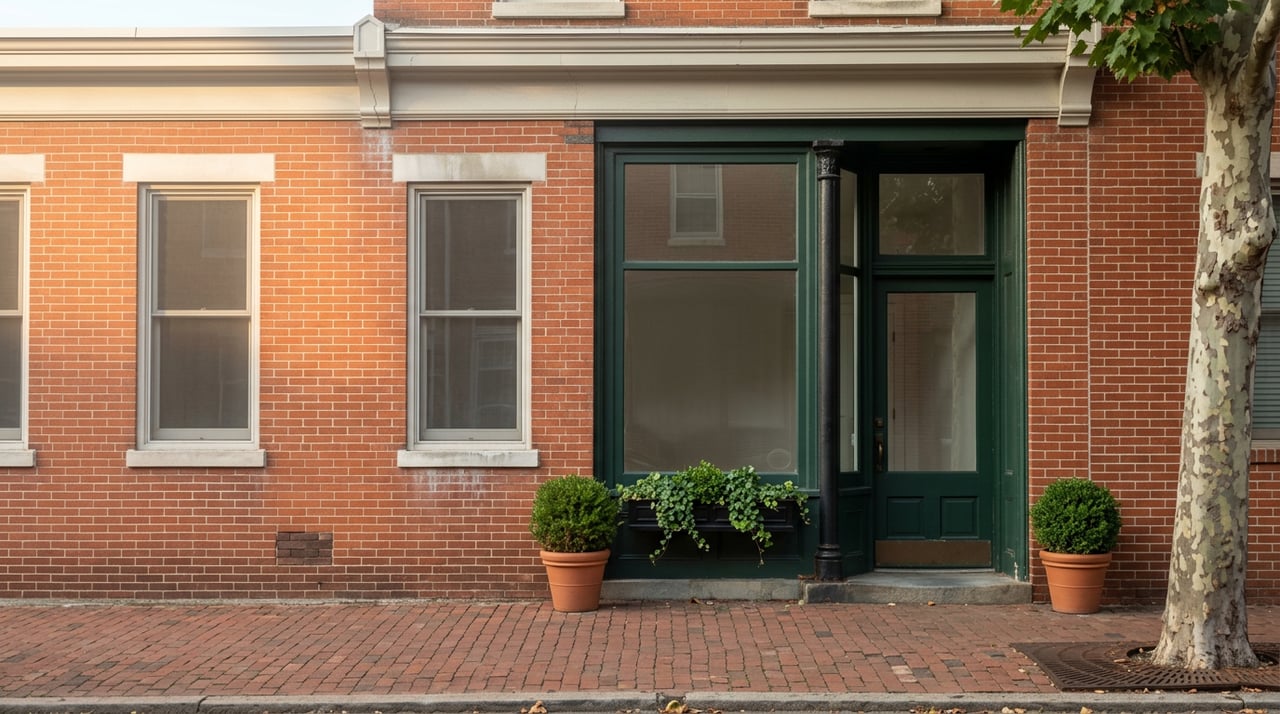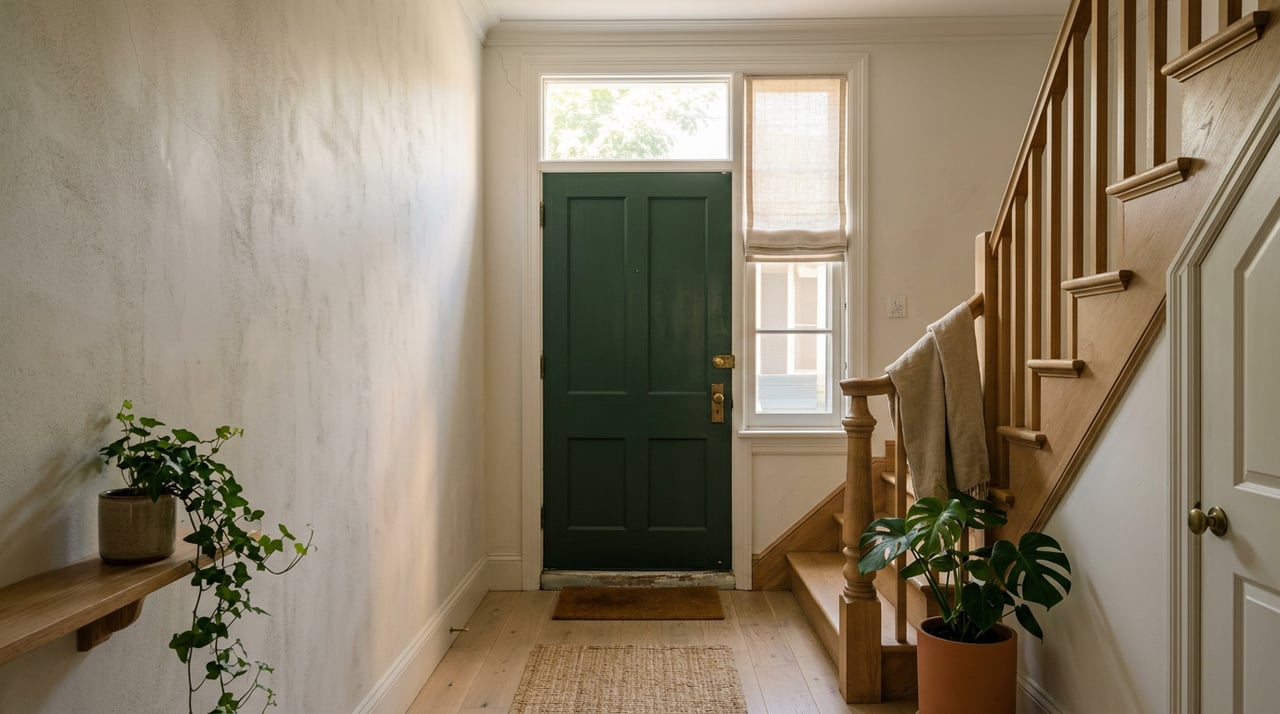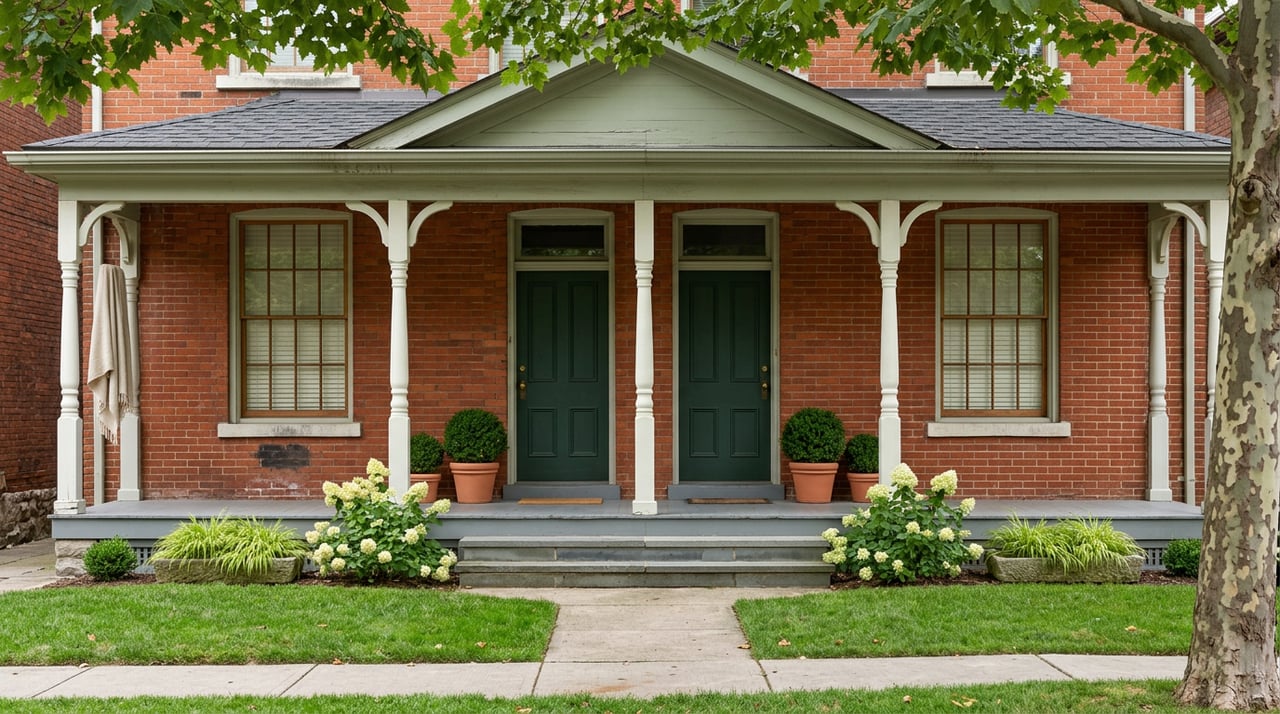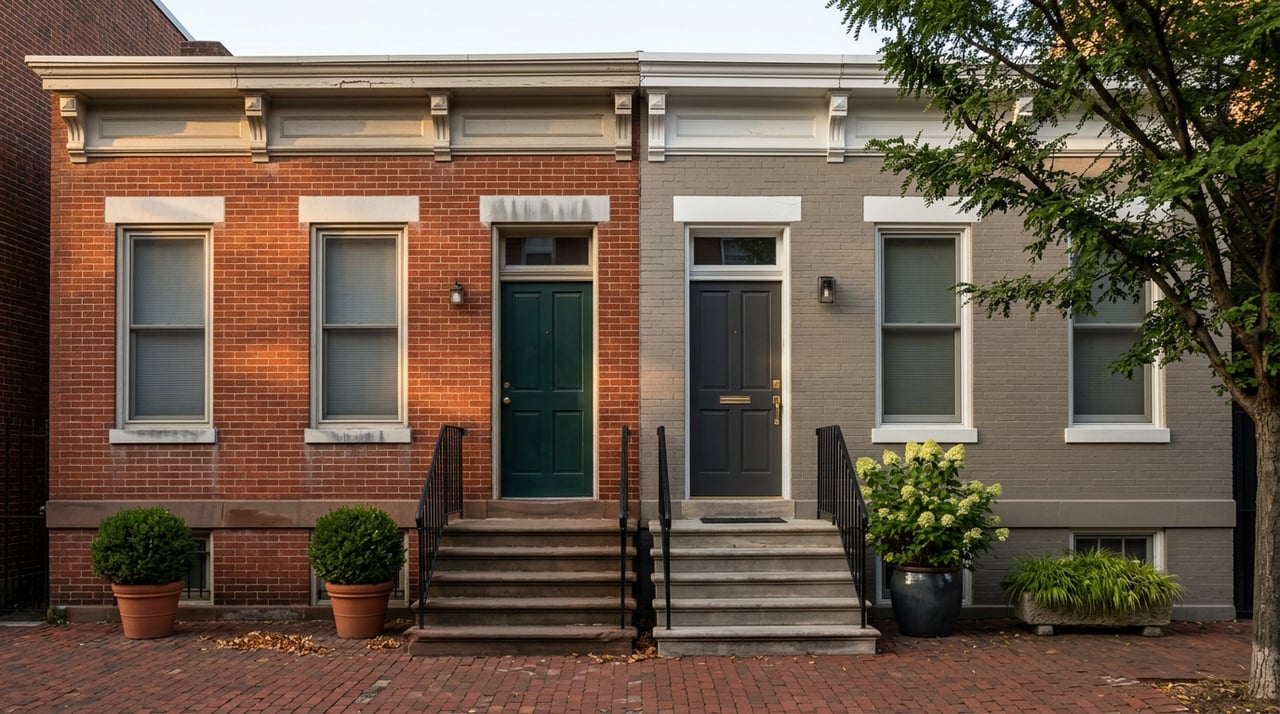
Walk down the 2100 block of Kimball Street and you can watch the split happen in real time. On one side, a three-story rowhouse dating to the early 1900s, original brick, original stoop, needs a full mechanical update before anyone lives in it comfortably. A few doors down, a permit board for a brand-new build going up on a lot that sat vacant for years. Same block, same zip code, same school catchment, two completely different products. When a buyer or seller in Graduate Hospital asks what their home is worth, they are usually being handed a single number that tries to describe both of these houses at once. It cannot do that job well, and understanding why is the difference between pricing a listing correctly and guessing.
The number everyone quotes, and what it's actually averaging
Graduate Hospital's appreciation numbers have been getting attention because they are genuinely unusual for Philadelphia right now. Redfin's neighborhood data put the median sale price across all home types at $633,300 in March 2026, up 19.5 percent year over year. By April 2026, Movoto had the median sold price at $664,000. Looking at the rolling three-month window ending in May 2026, market trackers pegged the typical home value around $667,000 with a median list price near $683,000, calling the year-over-year gain nearly 14 percent against a citywide figure of roughly 3 percent. By August 2026, the median home price stood at $669,000 with an average sale price of $715,249, and townhouses were spending an average of 47 days on the market.
Line those figures up and you get a climb from $633,300 to $669,000 in about five months, with reported year-over-year appreciation swinging anywhere from 14 to nearly 21 percent depending on which tracker and which month you check. That spread is not noise. It is what happens when a single median is trying to summarize two markets moving at different speeds: a slower-turning supply of unrenovated prewar rowhouses, and a faster-growing slice of new construction going up on vacant and redeveloped lots. The overall number goes up because the mix is shifting, not only because every home in the neighborhood is worth proportionally more than it was last year.
What it actually costs to build the other half of that median
The clearest evidence of that shift sits in the city's own building permit records. Over the past two years, a steady run of teardown and infill projects has been approved across Graduate Hospital, and the construction costs on file are remarkably consistent.
- 769 South 20th Street, a three-story single-family rowhouse completed on a formerly vacant lot between Fitzwater and Catharine, was built by the New Philadelphia Building and Design Group to a design by KCA Design Associates. Permitted construction cost: $406,000 for 2,980 square feet, or about $136 per square foot.
- 2249 Pemberton Street, replacing a two-story prewar rowhome, was designed by J.O.S. Serratore & Company Architects and built by Kildare Construction. Permitted cost: $325,500 for 2,520 square feet, about $129 per square foot.
- 2127 Kimball Street, permitted in July 2026, is a three-story single-family build from HDG Developers, Gnome Architects, and Lapstone LLC. Permitted cost: $216,600 for 1,640 square feet, roughly $132 per square foot.
- 916 South 15th Street, a two-family building at the corner of Montrose, was permitted in July 2026 to Boyer Lofts LLC with Ambit Architecture designing and City Suburban Home Builders building. Permitted cost: $500,000 for 3,801 square feet, about $132 per square foot.
- 923 South 20th Street, a three-unit building on a vacant parcel, was permitted to Walnut Street Development LLC at $400,000 in construction cost.
Every one of these lands in the same narrow band, roughly $129 to $136 per square foot in raw permitted construction cost. Compare that to what finished homes in the neighborhood actually trade for on a per-square-foot basis. Movoto's April 2026 data put the Graduate Hospital average at $399 per square foot, and a separate neighborhood dataset from around the same period put the average closer to $425 per square foot. Even after adding land acquisition, permitting, financing, and builder margin on top of the roughly $130 per square foot shell cost, the spread between what it takes to raise the frame and what the finished product commands once it hits the market is wide enough to explain why builders keep pulling permits on every vacant lot they can find, and why that construction keeps dragging the neighborhood median upward faster than the pace at which existing rowhouses are trading.
The scale isn't limited to single lots either. Innovator Village's Building A at 2401 Washington Avenue went up as a 28-unit, 25,264 square foot structure at a permitted cost of $3.2 million, about $127 per square foot, in the same range as the single-family teardowns. Down the street, OCF Realty's larger 2101 Washington Avenue project brought 247 units and roughly 40,000 square feet of ground-floor commercial space alongside 40 attached two-family townhomes, at a permitted construction cost of $40 million. The economics scale from the single rowhouse lot up to a multi-building development, and they all point the same direction.
The one product that isn't playing this game
Not every corner of the neighborhood is being reshaped by teardown economics. Naval Square, the gated community built inside the former U.S. Naval Home, a National Historic Landmark originally designed in 1826 by William Strickland, sits apart from both the vintage rowhouse market and the infill boom. It's adaptive reuse rather than new construction, and it prices accordingly: townhomes there have recently traded in the roughly $860,000 to $1 million range, while condos have sold for somewhere between about $370,000 and just under $690,000. That third data point is useful context. It shows that Graduate Hospital's median isn't a two-way blend so much as a three-way one, with the Naval Square product occupying its own lane that doesn't track the shell-cost arithmetic driving new infill.
For context on where that median sits relative to the neighborhoods buyers are usually cross-shopping, recent figures put Rittenhouse around $775,000, Society Hill near $699,000, Queen Village around $687,000, Old City near $652,500, and Washington Square West closer to $450,000. Graduate Hospital's climbing median is putting it within striking distance of Society Hill and Queen Village, even though a meaningful share of its inventory is still original-condition rowhouse stock priced well below that number.
The rule change that could slow the arithmetic down
The infill boom that's been fueling this price growth is also the reason a group of Graduate Hospital residents has been pushing for a new Southwest Center City conservation district, first reported by the Philadelphia Inquirer in October 2024. If adopted, it would be the city's ninth such district, covering an estimated 1,800 to 2,000 properties between 19th Street and Gray's Ferry Avenue. Unlike a historic district, a conservation district doesn't block demolition. It sets design rules for whatever gets built next: banning vinyl siding on street-facing facades, requiring that HVAC units and utility meters stay out of view from the sidewalk, mandating sloping mansard roofs instead of the boxy setback style common on recent infill, and requiring a street tree where one can be planted. Roof decks wouldn't be banned, but their size would be capped.
Architect Tim Kerner, who helped draft the proposal, put the case for it simply: "There has to be some variation because there are variations in the neighborhoods." The urbanist group 5th Square, which has opposed more restrictive design overlays elsewhere in the city, reviewed the language and found it broadly inoffensive. As of this writing, the city has not adopted the overlay. If it does move forward, it wouldn't touch the roughly $130 per square foot construction costs directly, but it would add design requirements, mansard roofs and hidden mechanicals cost more than a flat parapet and a wall-mounted condenser, that could narrow the margin between shell cost and finished sale price that has made teardown infill so attractive to builders.
What this means if you're actually buying or selling here
If you own an unrenovated rowhouse in Graduate Hospital, don't price against the new-construction comp two doors down. Your buyer pool is different, likely renovators and investors rather than move-in-ready shoppers, and your realistic timeline on market may run longer than the headline days-on-market figure suggests, since that figure is itself an average of fast-moving new product and slower-moving original stock.
If you're buying and the median price has you second-guessing whether Graduate Hospital still has value plays, it does. The spread between what a permitted new build costs to raise and what a vintage rowhouse two blocks over is asking reflects two different products, not a uniformly overheated neighborhood.
If you're evaluating a teardown or infill opportunity as an investment, the construction-cost math has been remarkably consistent for two years running. Whether that holds depends partly on whether the Southwest Center City conservation district clears City Council, and what it ends up requiring if it does.
A few questions worth asking before you act
Does this mean Graduate Hospital's whole market is overvalued? No. It means the reported median blends products with very different cost structures. A vintage rowhouse and a new build on the same block can both be fairly priced at very different numbers.
Will the conservation district stop new construction if it passes? Based on the draft reported in October 2024, no. It would set design standards, not a moratorium, and it explicitly does not seek to ban roof decks or halt redevelopment outright.
How do I know which side of the market my property is on? Age of construction, whether the mechanicals and envelope have been updated, and whether comparable sales nearby were teardowns or renovations all matter more here than in a neighborhood with more uniform housing stock.
Whether you're sitting on a rowhouse that hasn't been touched since the Nixon administration or you're trying to figure out what a finished new build two blocks away actually tells you about your own home's value, the numbers only make sense once you know which market you're standing in. Love City Group, led by Frank Genzano, tracks these blocks permit by permit and sale by sale. Get your free home valuation and find out where your property actually sits in Graduate Hospital's split market.