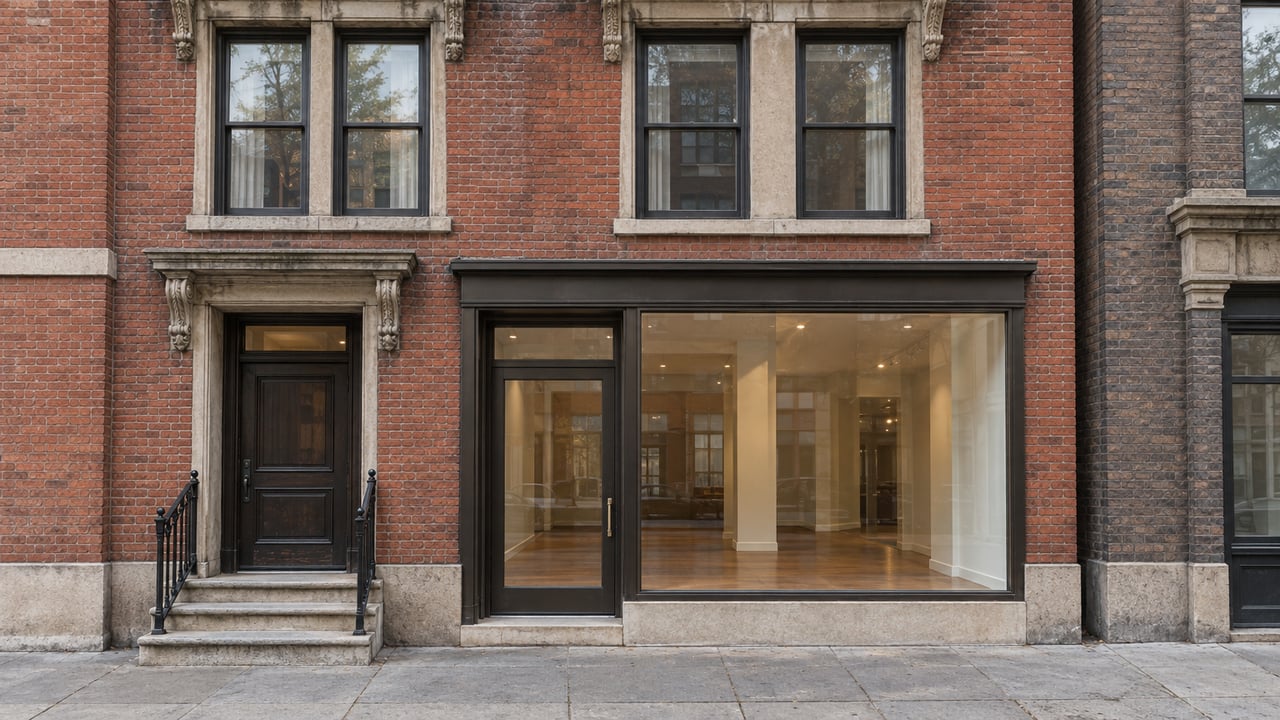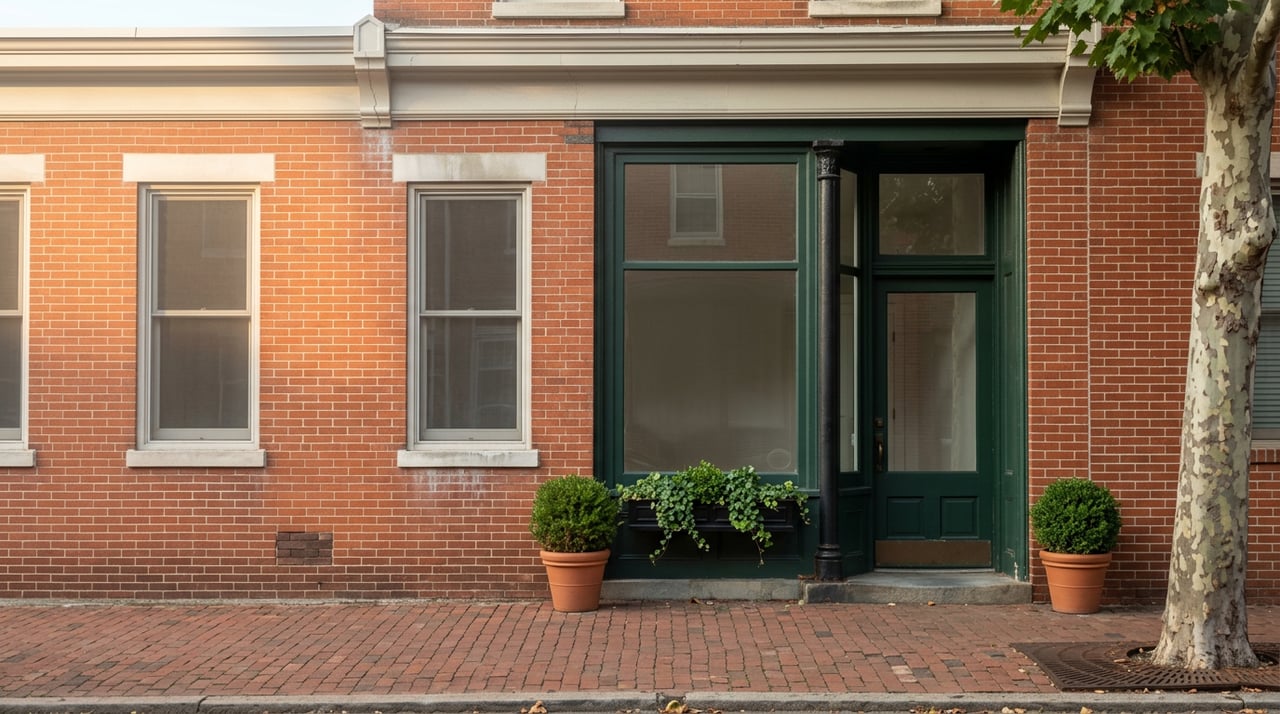
Walk South 4th Street on a Tuesday at 2 p.m. and it feels like the fabric district it always was. Bolts of wool stand at attention behind glass at Fleishman Fabrics & Supplies. A woman debates lining fabric with a shop clerk. The block is quiet in the specific way that working retail blocks are quiet: people come in with a task, get it done, leave.
Walk the same four blocks on the fourth Friday of the month around 8 p.m. and none of that is visible. Doors that closed at 5 are propped open. A gallery has strangers holding wine glasses on the sidewalk. Racks of vintage denim spill onto the pavement outside a shop that didn't exist five years ago. It is a different street, populated by people who came for none of the reasons the Tuesday crowd came.
Most people who live near Fabric Row only ever see one of these versions. If you work a normal schedule, you know the daytime clock, the one that has run for more than a century. If you're the type who plans a Friday around a neighborhood, you know the after-hours clock, the newer one. Almost nobody sees both, which is why the same four-block stretch gets described two completely different ways depending on who you ask: dying legacy district, or the city's next great retail corridor. It's neither. It's a street that runs two shifts, and understanding both is the only way to actually use it.
The Block Has Never Fully Agreed on What It Is
The stretch of South 4th between Bainbridge and Catharine has been called Fabric Row since Jewish immigrant merchants built a textile trade there more than a century ago, and the name stuck even as the retail mix around it kept changing. What's happening now, according to reporting in the Philadelphia Inquirer this past May, is the most visible shift in years: vintage boutiques and handmade jewelry stores now share the block with the family-run textile shops that have anchored it for generations.
That shift has a cost. Two longtime businesses, Essene and Bus Stop, had closed down in the year before the story ran, At My House owner Kelly Braun told the Inquirer, and she's noticing a shift in landlord expectations as the corridor's rising visibility pushes rents. Jen Zimmerman, who co-owns Sweet Peel Vintage, put the tension plainly: it takes real grit to run a small business here right now, and community is what keeps the remaining shops going.
The fabric merchants aren't fighting the change. Joshua Fleishman, the third-generation owner of Fleishman Fabrics & Supplies, one of the block's longest-running businesses, sees the new mix as a continuation of what the street has always done rather than a break from it.
"The diversity of today is a modern continuation of using fabrics in different ways. We are here for the makers and creators, and those are forever." — Joshua Fleishman, as quoted in the Philadelphia Inquirer.
That's the daytime clock: a street still built around people who make things, whether the raw material is a bolt of upholstery fabric or a rack of secondhand Levi's.
The After-Hours Clock Only Runs One Friday a Month
The nighttime version of Fabric Row isn't ambient gentrification. It runs on a schedule. According to Visit Philly, shops along the corridor keep extended hours for shopping and dining on the fourth Friday of every month, with Paradigm Gallery & Studio anchoring the art side of the evening. It's the one night a month when the two economies of the block actually overlap in real time: the fabric shop that closed at 5 is dark, but the boutique two doors down is doing its best business of the week, and gallery-goers are drifting between both.
If you've never planned around it, here's what actually changes on that one Friday:
- Retail hours on the block extend well past the normal 5 or 6 p.m. close, turning a shopping errand into an evening out.
- Paradigm Gallery & Studio and other art spaces along the corridor time openings and shows to the date, giving the night a reason beyond retail.
- Foot traffic pulls in people who don't shop Fabric Row on a normal day, briefly mixing the daytime regulars with a newer, evening-only crowd.
Miss that Friday and you'll experience the street as either a fabric district or a boutique row, never both at once. That's the whole trick of the block: its two identities are real, but they're scheduled, not simultaneous.
One Block East, the Same Clock Problem Played Out at a Beloved Address
The same pattern, an old identity giving way to something deliberately in-between, played out just east of Fabric Row at 623 South 6th Street. For 16 years that address belonged to Bistrot La Minette, chef Peter Woolsey's tightly focused French bistro, which closed in the summer of 2024, according to Philadelphia Magazine. It was the kind of restaurant that had convinced a generation of diners something real was happening in South Philadelphia's food scene, and its closing left an obvious gap.
According to the Philadelphia Inquirer, owner Hank Allingham, a Philadelphia native who spent his career in restaurant finance before opening his own place, didn't try to recreate La Minette. He and his wife Kat had eaten there before it closed and told each other they wished the space would someday be available. When it was, Allingham built something he calls "French-ish": looser, less formal, built for regular use rather than special occasions.
"You can come for a date-night dinner, eat alone at the bar, or watch a game." — Hank Allingham, as quoted in the Philadelphia Inquirer.
Side Eye opened in February 2026. An Inquirer review published this August notes that front-of-house service has improved since some early service problems, while dishes are still being refined. The review offers one snapshot of a new restaurant taking shape at an established address, much as Fabric Row continues to evolve a few doors down.
For what it's worth, the neighborhood's appetite for testing out these newer spots is well established. Queen Village's third annual Restaurant Week just wrapped on August 9, running prix-fixe deals at more than 20 spots from The Twisted Tail to Fitz on 4th, according to organizers at the Queen Village Neighbors Association. The corridor has the dining infrastructure to support both its old anchors and its newer ones.
Sunday Runs on a Third Clock Entirely
If Fabric Row's daytime and after-hours identities are the two clocks worth knowing on 4th Street, there's a third one worth building your week around: Headhouse Farmers Market, which runs every Sunday from 10 a.m. to 2 p.m. at 2nd and Lombard. Established in 2007 and operated by the Food Trust, it's technically a few blocks over in Society Hill, but the Queen Village Neighbors Association lists it on its own events calendar because that's how residents actually use it: as their Sunday, not someone else's.
Unlike Fabric Row's shifting retail identity or Side Eye's still-settling menu, Headhouse doesn't change much week to week. That's the point. It's the fixed anchor against which everything else on the calendar moves. A neighborhood that's actively renegotiating what half its main commercial street is supposed to be still needs one thing that doesn't renegotiate anything, and for Queen Village, that's a Sunday morning market that's run the same way for nearly two decades.
Two Clocks, One Block, and a Neighborhood Worth Knowing Both Ways
None of this means Fabric Row is thriving or struggling in any simple sense. It means the street is holding two real identities at once and mostly showing them at different times. The fabric shops that trace their roots back generations aren't relics waiting to close. The vintage stores and galleries aren't a hostile takeover. They're running on separate clocks that happen to share a sidewalk, and the only way to actually know the block is to catch it twice.
That kind of layered, evolving character is exactly what makes a neighborhood worth paying attention to over time, whether you're deciding where to spend a Friday night or eventually deciding what your own rowhouse near that corridor might be worth. Love City Group, led by Frank Genzano, spends its time in these blocks for a living. If a Fabric Row walk ever turns into a bigger question about your own place in Queen Village, reach out for a free home valuation and a conversation grounded in the same street-level detail as everything above.