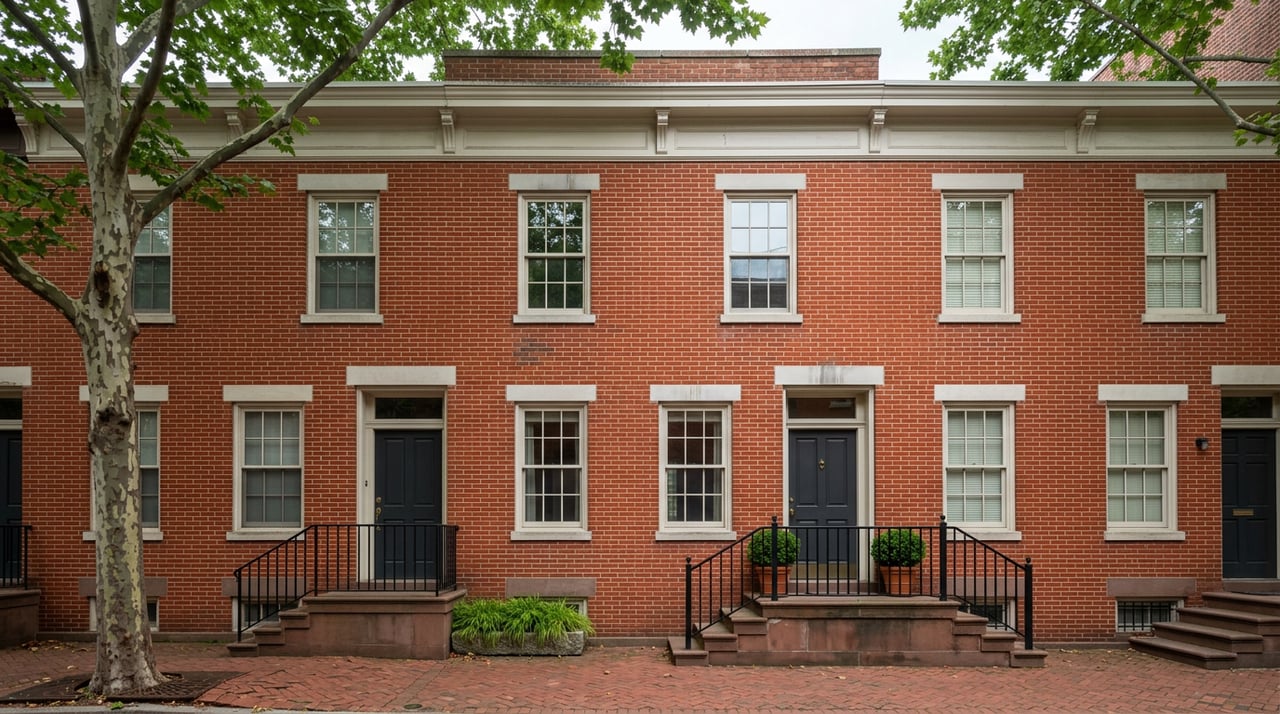
The Philadelphia metro just posted a record. Bright MLS reported a median sold price of $460,000 in June 2026, with median days on market at 11 and new pending sales up 3.9% year over year. Those numbers set a tone, and they will show up in every buyer's pre-tour reading.
They will not decide what your Queen Village rowhouse closes at. What decides that is the permit history a buyer's agent pulls on eCLIPSE the night after the first showing, read against two overlapping rulebooks that apply on your block and almost nowhere else in the city.
The document that runs the negotiation
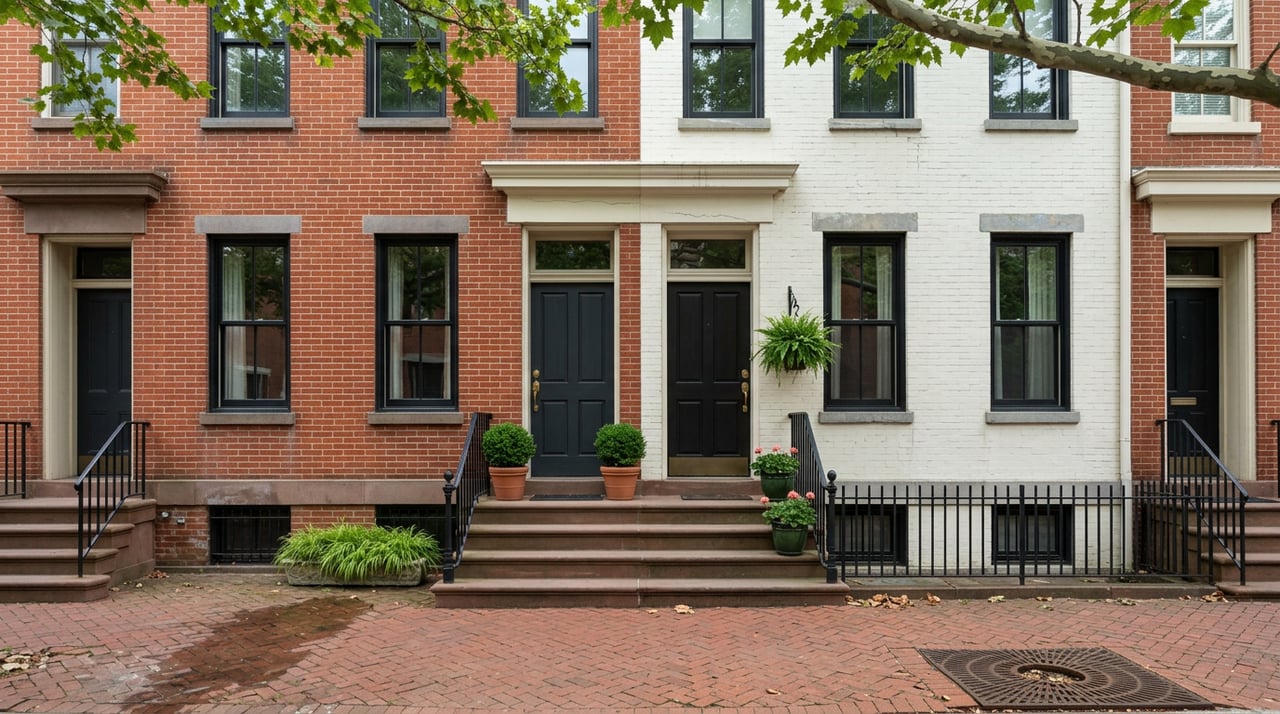
Queen Village is the original Neighborhood Conservation Overlay in Philadelphia. The Queen Village Neighbors Association organized it in 2008, and it is still codified at §14-504(5) of the Philadelphia Zoning Code. The overlay covers the area bounded by the north side of Washington Avenue, the north side of Bainbridge Street, the east side of 6th Street, and the west side of Front Street, minus the South Street/HeadHouse Square carve-out.
The overlay is administered by the Philadelphia City Planning Commission, not the Historical Commission. That distinction matters at closing because the two bodies produce different paperwork on different timelines, and a buyer's lender will ask for both when either applies.
Roof decks shall be setback at least eight ft. from the front property line, or a parapet at least 42 in. high shall be used to enclose the front of the deck.
That single sentence from §14-504(5) is the most-cited line in Queen Village listing negotiations. Half the rowhouses on the interior blocks have a roof deck. A meaningful share of those decks predate the current owner and predate an inspection anyone can locate.
Four items a buyer's agent will flag first
The audit that matters is the one a competent buyer's agent runs before their client writes an offer. Four items surface consistently in Queen Village transactions.
The roof deck without a matching permit. If eCLIPSE has no zoning permit for a deck you can see on the aerial, the buyer's inspector will note it, the buyer's lender will ask about it, and the buyer's agent will price a credit against it. The 8-foot front setback or 42-inch parapet in §14-504(5) is the rule the deck has to meet, and legalizing an existing deck runs through both L&I and, if the property is designated, the PHC.
A curb cut or street-facing garage. The NCO caps new curb cuts at 10 feet for a single space and 20 feet for a double, and the whole reason Queen Village pushed for the overlay in 2008 was to slow the conversion of front rooms into ground-floor garages. Existing legal garages are an amenity. Anything added without a permit is a liability, and buyers know the difference.
A front-facade material swap. The overlay requires that materials on a new structure or facade be similar to those on the nearest residential structures on the same street. Vinyl over brick, a repainted stone lintel, or a replacement door that changed the recessed-entry proportions can all become inspection items if the property is individually designated on the Philadelphia Register.
A rear addition with no party-wall documentation. RSA-5 zoning gives you zero side setback and a 9-foot minimum rear yard. Structural work touching a party wall may have required written cooperation from your neighbor. If it did and you do not have it, the buyer's attorney will want to see it before closing.
None of these items are hypothetical. The Historical Commission's July 2025 meeting docket, reported by Hidden City, approved a rear addition at 800 S. 5th Street and cleared demolition at 700 S. 2nd Street, with an 18th-century individually designated building on the same lot preserved. That is the level of scrutiny active on this side of South Street.
The PHC layer, only if your address triggers it
Queen Village is not a citywide historic district. Society Hill, across South Street, is. But roughly 15,000 Philadelphia properties are either individually designated or contributing to a historic district, and Queen Village holds a share of them, including landmarks like the Nathaniel Irish House on South Front Street and the Sparks Shot Tower on Carpenter Street. Old Swedes' Church at Christian and Columbus dates to 1700.
You can check any address at atlas.phila.gov. If yours is designated, exterior work needs a Certificate of Appropriateness from the Philadelphia Historical Commission before L&I issues a permit. Windows, doors, stoops, cornices, railings, shutters, roof decks, and fences all fall under review. Interior work generally does not. PHC staff approves most applications without full commission referral.
The timeline is the part sellers underestimate.
| Path | Typical timeline | When it applies |
|---|---|---|
| By-right residential permit | 10–20 business days | Standard work inside envelope |
| PHC review added | +30–60 days | Any exterior change on a designated property |
| ZBA variance hearing added | +30–60 days | Anything outside the NCO or zoning envelope |
| PWD stormwater review added | +15–30 days | New impervious surface |
A seller who plans to legalize a deck, a rear bump-out, and a front door before listing is looking at a two- to four-month runway if any of it touches a designated facade. That is a listing-calendar problem, and it is worth solving before photos rather than during attorney review.
What the 2026 numbers actually say about your window
The metro headline is strong. The lived reality inside Queen Village is more specific.
Homes.com put the Philadelphia MSA median at $405,000 in May 2026, up 3.6% year over year, with single-family homes at $500,000. Condo prices moved the other direction, down 1.3%. Redfin's city-level read for the three months ending May was a $290,000 median with 49 days on market and about two offers per home. Zillow named Philadelphia the sixth-hottest market for 2026, forecasting 2% to 4% appreciation.
Two takeaways for a Queen Village seller. First, the citywide median is not your comp. Buyers reading it will still show up expecting the QV premium the neighborhood has held since Patrick Conway told Philadelphia Neighborhoods in 2016 that a house with garage parking cleared $650,000, up from $499,000 in 2000. Second, the metro's 11-day median on Bright MLS is compressed by higher-end sales, and Bright MLS Chief Economist Lisa Sturtevant flagged that the second half of 2026 is likely to cool as affordability constraints bite. Sellers with a clean permit file will move inside that window. Sellers with an unresolved deck may not.
Then there is the check you write at closing. Philadelphia's realty transfer tax runs 3.278% city plus 1% commonwealth, for 4.278% total, typically split with the buyer but often shifted in negotiation. On a $700,000 rowhouse that is roughly $30,000 in transfer tax before commission. It is not a friction you can remove. It is a friction you should have priced in before you set a list.
A working listing sequence
For a Queen Village seller who wants to close cleanly in this market, the order of operations matters more than any single fix.
- Pull the property record at atlas.phila.gov and confirm zoning, NCO status, and any Historical Commission designation.
- Pull the eCLIPSE permit history and reconcile every visible improvement, especially the roof deck, rear addition, HVAC compressor placement, and any window or door replacement.
- If designated, book a preliminary consultation with PHC staff before you invest in legalization drawings. Staff approves most applications without commission referral, and the free pre-submission conversation saves weeks.
- Resolve open L&I violations. Unresolved violations affect financing and resale, and title will surface them regardless.
- Set the list price against actual Queen Village closes inside the overlay, not against the citywide or metro median.
FAQ
Does the NCO block me from selling as-is with an unpermitted deck? No. It does not block the sale. It changes the buyer pool, the appraisal, and the negotiating position. Cash buyers will absorb the risk at a discount. Financed buyers often cannot.
My house is not individually designated. Do I still deal with the Historical Commission? Only if it is designated or contributing. The NCO applies regardless and is reviewed by the Planning Commission, not the PHC.
Are QVNA reviews binding on my sale? The Queen Village Neighbors Association is not a permitting authority. Their zoning committee weighs in during development review, and buyers occasionally ask about community engagement history on additions. It is context, not a legal step.
Does the record June 2026 metro number mean I should list higher? It means the market is receptive. It does not mean Queen Village comps have moved by the same percentage. Price against closes inside the overlay in the last 90 days.
If you own inside the overlay and want a read on what your permit history means for your list price, Love City Group works Queen Village listings block by block. Get your free home valuation and a plain-English review of what a buyer's agent will find before they find it.