Looking for a home that feels connected to the street, the block, and your daily routine? That is a big part of the appeal of rowhouse living in Pennsport. If you are curious about how these homes use space, how the neighborhood supports day-to-day life, and what the rhythm of living here can really feel like, this guide will walk you through it. Let’s dive in.
Pennsport Rowhouses at a Glance
Pennsport is a largely residential riverfront neighborhood stretching from the Delaware River to 4th Street and from Washington Avenue to Snyder Avenue. Visit Philadelphia describes its streets as lined with 20th-century row homes, which helps explain why the neighborhood feels so consistent from block to block.
That housing pattern also fits Pennsport’s history and location. The City of Philadelphia’s rowhouse manual notes that Philadelphia rowhouses were often concentrated near factories and active waterfronts, and Pennsport sits right in that kind of setting. If you want a neighborhood where the housing stock and the location tell the same story, Pennsport stands out.
How Rowhouse Space Feels
A Pennsport rowhouse often lives bigger through layout than through raw square footage. Instead of oversized rooms, you usually get a series of compact spaces that each need to work hard. In daily life, that can feel practical, efficient, and surprisingly comfortable once you settle into the flow.
The City’s rowhouse manual describes two helpful South Philly rowhouse types. One is the workingman’s house, often around 1,000 to 1,600 square feet on two floors, with features like an entry vestibule, a shed kitchen, shallow closets, indoor plumbing, and central heating. The other is the streetcar town house, often around 2,200 to 2,500 square feet on three floors, with front porches, bay windows, tall ceilings, and more decorative woodwork.
In Pennsport, many homes fit somewhere along that spectrum rather than into one exact category. That is part of the charm. You may find a compact two-story home with a smart rear layout, or a taller home with more vertical separation between living, sleeping, and storage.
Front-to-Back Living
One of the easiest ways to understand a rowhouse is to think of it as a front-to-back sequence. In many homes, you move from the stoop or porch into the living room, then into a compact kitchen, and then to a rear yard or roof deck if the property has one.
That layout shapes your routine. The front of the home often feels tied to the street and daily comings and goings, while the back can become a quieter zone for cooking, storage, or outdoor time. It is a simple plan, but it tends to make city living feel organized.
Vertical Space Matters
Because many Pennsport homes are narrow, vertical living becomes part of the experience. Stairs, upper floors, and stacked rooms often create a sense of separation without needing a huge footprint.
For some buyers, that means a little more privacy between living and sleeping areas. For others, it means thinking carefully about how each floor supports your routine. Either way, the layout often encourages you to use space with intention.
Style Comes From Function
Pennsport rowhouses often have personality because their features were built for everyday use. Entry vestibules, porches, bay windows, tall ceilings, and wood details can all add visual interest while still serving a practical purpose.
That is part of why these homes photograph well and live well. Their style is not only decorative. It is tied to the way Philadelphia rowhouses were designed to handle compact urban lots.
Storage Takes Planning
Storage is one of the biggest day-to-day considerations in a rowhouse. The City manual points out that closets are not usually generous by default, which means smart storage choices matter.
Helpful details can include closets that are at least 24 inches deep, shelves above the hanging rod, and hooks on doors or closet sides. In kitchens, upper cabinets that go to the ceiling, along with pull-out shelves or drawers, can make a small footprint work much better. In some cases, even curtains instead of closet doors can help save space.
For buyers, this matters because a home does not need to be huge to feel functional. What matters more is whether the layout supports the way you live. A well-planned small home can feel easier to manage than a larger one with awkward storage.
Kitchens Often Work Hard
In many rowhouses, the kitchen is one of the most important work zones in the home. The City manual emphasizes efficient layouts, easy-to-reach cabinets, and practical storage, which tells you a lot about how these homes are meant to function.
If you are touring homes in Pennsport, pay attention to how the kitchen connects to the rest of the first floor. A compact kitchen can still feel effective if the circulation is simple and the storage is thoughtful. In rowhouse living, good design often shows up in small details.
Outdoor Space Shapes the Routine
One of the best things about rowhouse living is that outdoor space comes in a few different forms. In Pennsport, that might mean a stoop, a porch, a small rear yard, a roof deck, nearby parks, or easy waterfront access.
You may not always have a large private yard, but you often have several ways to get outside close to home. That can make the neighborhood feel larger than your lot line.
The Stoop and Porch Matter
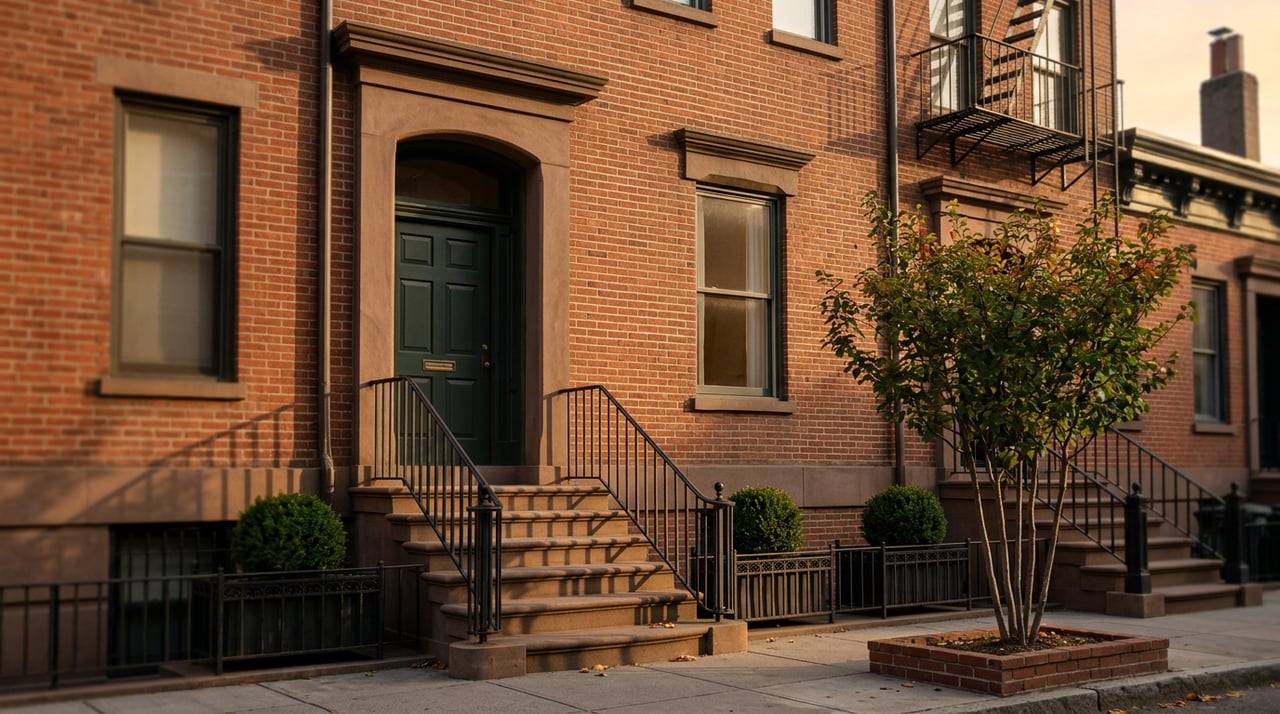
The City’s rowhouse manual treats the stoop as more than an architectural detail. It is a place to watch street life and stay connected to what is happening on the block. Front porches serve a similar role while offering some protected outdoor space.
That matters in Pennsport because rowhouse living is not just about the interior. The transition between house and street is part of the lifestyle. Even a few steps out front can become part of your daily rhythm.
Roof Decks and Rear Yards
Where yards are small and buildings are close together, roof decks can become a valuable amenity. The City manual notes that roof decks are common in rowhouses, though they require permits and careful waterproofing.
The same manual also points out that older rowhouses are adaptable. Rear additions can be removed and rebuilt, kitchens can be enlarged, and roof decks can be added when structure and zoning allow. That gives buyers and owners a useful way to think about these homes: compact does not have to mean fixed forever.
Pennsport Makes Walking Easy
Pennsport’s lifestyle is shaped by what is close at hand. Visit Philadelphia notes that the neighborhood is extremely walkable and bikeable, and SEPTA buses run along Moyamensing Avenue, Front Street, and Washington Avenue.
That convenience helps define the routine here. You can build your week around short trips, neighborhood stops, and nearby parks instead of always planning a full outing. At the same time, Visit Philadelphia notes that evening parking can be tight, which is worth keeping in mind if you drive regularly.
Parks and Waterfront Access Add Breathing Room
Rowhouse living feels different when the surrounding neighborhood gives you room to stretch out. In Pennsport, green space and waterfront access help balance the compact feel of the housing stock.
That is one reason the neighborhood can appeal to buyers who want an urban setting without giving up everyday access to open air.
Dickinson Square Park and Jefferson Square Park
Dickinson Square Park serves as one of Pennsport’s main outdoor anchors. The local civic association describes it as a 3-acre public space with basketball courts, swing sets, jungle gym equipment, and large shade trees.
Jefferson Square Park offers a different kind of experience. It is described as a restored strolling park with wide paths, benches, granite retaining walls, and a central focal point. Together, these parks support a range of routines, from active time outside to a simple neighborhood walk.
Sunday Farmers Market Routine
Dickinson Square Park also hosts a Sunday farmers market from 10 a.m. to 2 p.m. That gives residents an easy weekly ritual and one more reason to move through the neighborhood on foot.
For many people, that is what makes Pennsport feel livable. The value is not just in having amenities nearby. It is in having repeatable routines that feel easy to maintain.
Delaware River Waterfront Access
Pennsport’s riverfront setting is one of its defining advantages. The Delaware River Waterfront Corporation says the Delaware River Trail is a 3.3-mile waterfront route from Pier 70 in South Philadelphia to Penn Treaty Park, with interim segments between Tasker Street and Washington Avenue, and it is accessible year-round.
Visit Philadelphia also points to Pier 68 and Washington Avenue Pier as easy waterfront destinations for Pennsport residents. DRWC notes that the Land Buoy spire at Washington Avenue Pier includes a spiral staircase for river views. If you like having nearby places to walk, pause, or reset, this access can become a real part of your routine.
Daily Stops Build the Neighborhood Rhythm
Pennsport’s day-to-day life is not built around one giant destination. It is built around smaller, walkable stops that fit into your week.
Visit Philadelphia highlights coffee and pastry spots like Cake and Joe, Herman’s Coffee, Rebel & Wolf, and Grindcore House. Cake and Joe lists a Pennsport location at 1401 East Moyamensing Avenue with daily hours, and the Pennsport Civic Association names Herman’s Coffee and Cake and Joe among neighborhood businesses that contribute to community life.
For meals and evenings out, Visit Philadelphia points to places like John’s Roast Pork, Pho Saigon, Gooey Looies, Jaxx Steaks Taproom, Mifflin Tavern, and Moonshine Philly. It also notes that the area around Front Street and 2nd Street, often called Two Street, becomes especially lively on New Year’s Day as Mummers HQ.
For quick errands, nearby options help round out the routine. The Dickinson Square West civic directory lists Mifflin Market at 1901 S. 5th Street and Paisa Supermarket at 679 Tasker Street. In a neighborhood like Pennsport, that close-to-home convenience can matter just as much as a home’s interior layout.
What Buyers Should Notice
If you are considering Pennsport, rowhouse living is easier to evaluate when you focus on function. Try to picture how you would actually move through the house during a normal weekday, not just how it looks during a showing.
A few practical things to watch for include:
- How the first floor flows from front door to living area to kitchen
- Whether storage feels intentional or limited
- How upper floors create separation and privacy
- Whether there is access to a rear yard, porch, stoop, or roof deck
- How close the home is to parks, waterfront routes, transit, and daily errands
These details can shape your experience as much as square footage. In Pennsport, the best-fit rowhouse is often the one that matches your routine.
What Sellers Should Highlight
If you own a rowhouse in Pennsport, your home’s appeal often comes from a combination of layout, character, and neighborhood access. Buyers are often responding to how a home lives just as much as to its finish level.
That means features like a useful vestibule, updated kitchen storage, a rear yard, roof deck access, or a strong connection to Dickinson Square Park or the waterfront can all help tell the story. In a neighborhood-first market, clear positioning matters.
If you are preparing to sell, it helps to present the home in a way that makes the routine visible. A buyer should be able to imagine morning coffee nearby, a Sunday market stop, a walk to the river, and a comfortable evening back at home.
If you are thinking about buying or selling in Pennsport and want neighborhood-specific guidance, Frank Genzano can help you understand how a rowhouse’s layout, location, and presentation fit today’s market.
FAQs
What is rowhouse living like in Pennsport, Philadelphia?
- Rowhouse living in Pennsport usually means a compact, vertical home with a practical front-to-back layout, modest storage, and strong access to walkable neighborhood amenities, parks, and the waterfront.
What types of rowhouses are common in Pennsport?
- Pennsport rowhouses often fall along a range that includes smaller two-story workingman’s houses and larger three-story streetcar-era town houses, with many homes blending features from both.
How do Pennsport rowhouses use space efficiently?
- Pennsport rowhouses often rely on multi-purpose rooms, compact kitchen layouts, vertical separation across floors, and practical storage solutions like deep shelving, hooks, and ceiling-height cabinets.
What outdoor spaces are available near Pennsport rowhouses?
- Depending on the property, outdoor space may include a stoop, porch, rear yard, or roof deck, and the neighborhood also offers Dickinson Square Park, Jefferson Square Park, Pier 68, Washington Avenue Pier, and access to the Delaware River Trail.
Is Pennsport, Philadelphia walkable for daily errands and routines?
- Yes. Visit Philadelphia describes Pennsport as extremely walkable and bikeable, with nearby coffee shops, restaurants, grocery options, parks, and bus routes along Moyamensing Avenue, Front Street, and Washington Avenue.
What should buyers look for in a Pennsport rowhouse?
- Buyers should pay close attention to layout, storage, kitchen function, outdoor space, and how easily the home connects to the parks, waterfront, transit, and neighborhood stops they expect to use regularly.